Malcolm Sanger
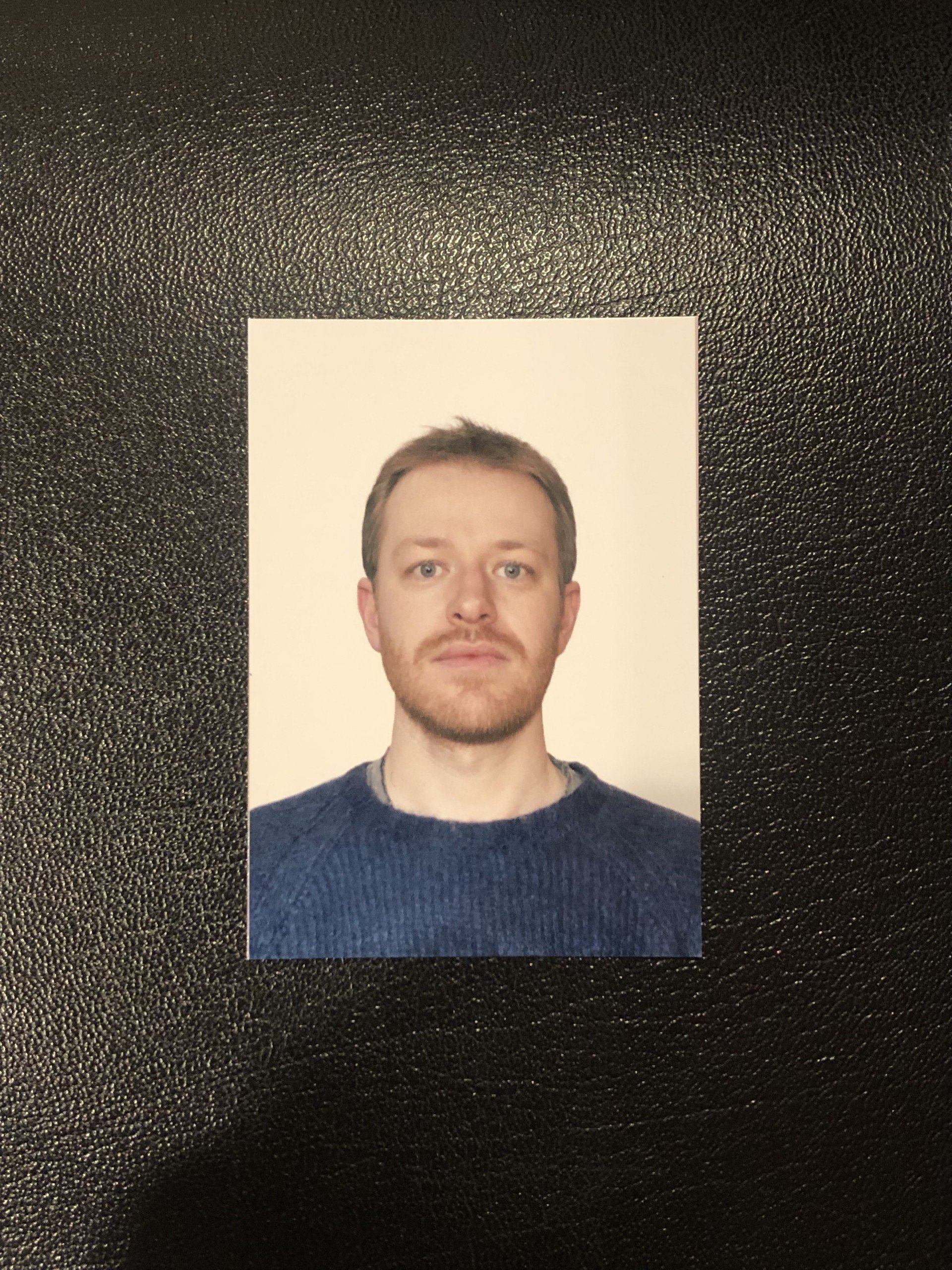
Malcolm Sanger is a PhD candidate in Communication Studies at McGill University. He studies how processes of mediation require, represent, and reorganize environments. He is especially interested in how forests, trees, and wood appear in material and discursive responses to climate change. His dissertation – submitted in early September 2026 and defended in early November – is an account of the histories, infrastructures, and mediations of tree planting in Canada. He has work published or forthcoming in the Journal of Environmental Media, WIREs Climate Change, The New Inquiry, Limn, The Goose, and The Ex-Puritan.
Contact: malcolm.sanger@mail.mcgill.ca
PROJECTS
Making trees in Canada: Settler capitalism, infrastructures, silvicultural techniques
My dissertation considers how reforestation functions as a contemporary response to climate change by studying its relation to histories of scientific forestry and the environment, political economic arrangements, and cultural representations and mediations. Drawing on environmental media, political economy, science and technology studies, and communications theory, this project argues that contemporary responses to climate change must also respond to the material histories, political arrangements, and cultural theories from which they emerge. If states and industry are to plant lots of trees to capture and sequester carbon and so offset the anthropogenic effects of fossil fuels, then forestry’s entanglement with the dispossessions of early capitalism and settler colonialism must be considered alongside the infrastructures, scientific and media technologies, and labour practices relevant to tree planting in Canada today. This work is funded by a SSHRC Doctoral Fellowship, Fonds de Recherche du Québec Société et Culture (FRQSC), and a Wolfe Dissertation Fellowship.
Environmental Communication and talking trees
This project studies the scientific and popular proposition that trees communicate. Taking up the work of forest ecologist Suzanne Simard, and its wider reception, I consider contemporary environmental relations and anxieties amid the dreams of straightforward communication and the difficulties of mediation. I also construct and analyze an archive and genealogy of theories of language and signs that feature forests and trees, and consider the material role of wood in the history of the ubiquitous communications technology of paper and resulting ideas about communication. Across these, I aim to inform and improve our material and discursive responses to climate change.
Strengthening supply-side climate policy with social and cultural analyses of fossil fuels, Oil to Energy Equity Collaboration
With Canada Research Chair in Equitable Energy Governance and Public Policy Angela Carter, I have co-authored an article on how perspectives developed in the energy humanities and petrocultures can inform supply-side climate policy and theory. This work is aimed at both academics and policy leaders, and translates complex critical humanities work into actionable groundings for future research and political action.
Just Storage, McGill Energy Centre
In a project with geographers and chemists, I study how the canonical media studies category of “storage” can inform the development of emerging battery technologies and more equitable energy storage infrastructures. This “Just Storage” work aims at avoiding the destructive environmental and political effects of fossil fuels, and also explicitly engages the challenges and rewards of interdisciplinary research.
Tulum’s tourists and migrants: Gaps and overlaps
Funded by SSHRC, Michael Smith Foreign Study, and FRQSC, my MA Anthropology thesis (supervised by Diana Allan) explored the gaps and overlaps between tourists and migrant workers in Tulum, Mexico through mobility and visuality. The figure of montage was considered a form of “encounter” to image these overlaps in Tulum that occur despite and because of the gaps formed by rhythms of capitalist expansion that break from and build on the past, leave ruins in the present, and collapse a future.
PUBLICATIONS
Sanger, Malcolm. 2026. Counting trees and carbon: Subsumption, quantification, and silvicultural techniques. The Journal of Environmental Media. Intellect Books. https://doi.org/10.1386/jem_00174_1
Sanger, Malcolm and Angela Carter. 2026. Strengthening supply-side climate policy, theory, and action with insights from social and cultural analyses of fossil fuels. WIREs Climate Change. Wiley Interdisciplinary Reviews. 1-12. https://doi.org/10.1002/wcc.70082
“Getting lost.” 2026. FORAGE Understories: Doing Ethnography in Forests. Forest Anthropology Working Group on Europe and Beyond. Published 25 June 2026. https://foragenetwork.org/2026/06/25/understories-getting-lost/
Sanger, Malcolm. 2022. “Can’t see the wood for the trees.” The New Inquiry. Published 9 August 2022. https://thenewinquiry.com/cant-see-the-wood-for-the-trees/
ACTIVITY
“Making media!” workshop (funded by Student Engagement Fund in 2024 & 2026)
NEF (Nouveau Eco Feelings), reading group on eco-anxiety, 2025-26
Visiting scholar at Centre for Environmental Humanities, Aarhus University, Spring 2025
RAT (Reading Aloud Tuesdays), poetry reading group, 2021-24
BOATS (Based On A True Story) Film series, 2016-22
Member of Critical Media Lab
Member of Subsumption Working Group
Member of Oil to Energy Equity Collaboration